

What Happens When Environment Becomes Therapy
We think of therapy as something done in a room, by a person. The Counterclockwise protocol suggests the room itself can be the intervention.
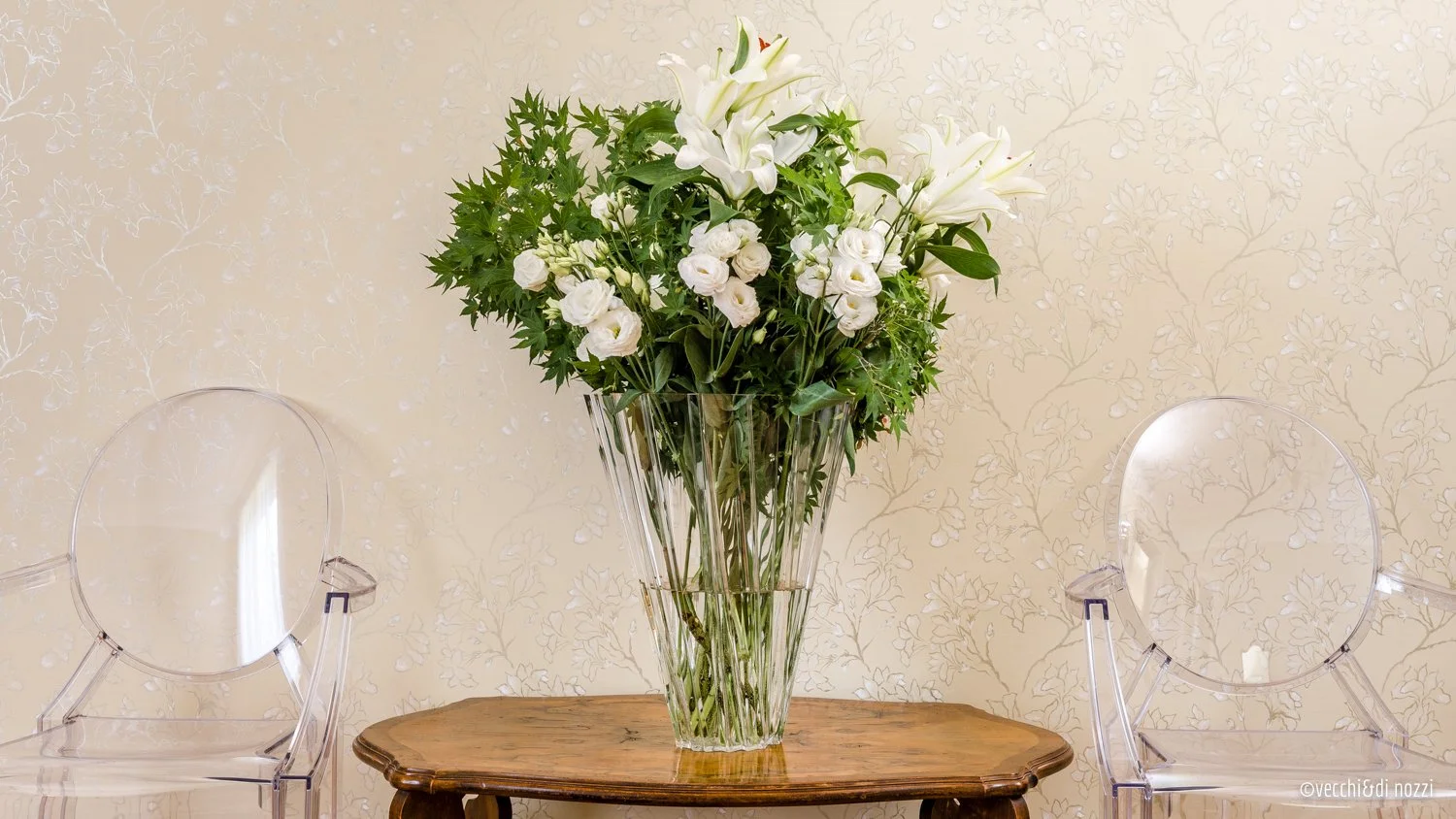
Photo copyright: Villa Frua
Architecture, as a discipline, has long understood that space affects mood. We feel differently in a cathedral than in a shopping mall, in a quiet library than in a crowded airport. Light, scale, texture, sound — these are not neutral. They act on us.
What the Counterclockwise research adds to this intuition is something more specific and more startling: the environment does not only affect how we feel. It affects what the body does.
The logic of immersive design
When Ellen Langer designed her 1979 monastery experiment, she made a deliberate choice: not to ask the participants to remember their younger selves, or to visualise being younger, or to do any kind of psychological exercise about age. Instead, she built a world in which the signals available to the senses corresponded to a different decade — and let the nervous system draw its own conclusions.
This is the logic of immersive environmental design as therapy. Rather than trying to change the mind directly — which is difficult, effortful, and often produces temporary results — you change the environment that the mind is reading. The mind, in turn, updates its model of the body. The body responds accordingly.
It sounds simple. The implications are not.
What the Reverso environment contains
Every element of the Reverso retreat space has been chosen to serve the protocol. This is not interior design in the conventional sense — it is more like set design for a neurological experiment.
The period objects — VHS cassettes, CRT televisions, audio cassettes, magazines and newspapers from a specific era — are not decoration. They are stimuli. Each one carries cultural associations that date to a time when the participant was younger, more physically capable in their own estimation, less encumbered by accumulated age-beliefs.
The conversations are guided. The news and cultural references that enter the space are from the period. The activities are calibrated to what a person in their forties or fifties — not their sixties or seventies — would naturally engage in.
The goal is not to create an illusion. It is to create a context in which a different set of expectations about the self becomes available — and to observe what the body does with them.
The takeaway
We tend to think of our environment as a background condition — something that frames experience without fundamentally shaping it. The Counterclockwise research suggests this is a significant underestimate of the environment's role.
What surrounds us is not neutral. It is continuously sending signals to the nervous system about who we are, what we are capable of, and what to expect. Design that environment with intention, and you are doing something that looks less like decoration and more like medicine.
Reverso is, among other things, an experiment in what happens when you spend six days inside an environment that was built to tell you something different.
Reverso Counterclockwise — reverso-retreat.com
