The Data: What Università Cattolica and Harvard Actually Measured
The claim that a week-long retreat can produce clinically significant health improvements is a strong one. Here is the evidence behind it.
Science, at its most useful, does not ask you to take things on faith. It asks you to look at the methodology, consider the evidence, and draw your own conclusions. This article exists to make that possible.
The Reverso protocol is built on two bodies of research: the foundational work of Ellen Langer at Harvard University, conducted over four decades from 1979 onwards; and a 2021 randomised controlled clinical trial conducted by Professor Francesco Pagnini and colleagues at Università Cattolica del Sacro Cuore in Milan.
Langer’s foundational studies
Langer's 1979 Counterclockwise study, described elsewhere on this site, established the core hypothesis: that immersive environmental change designed to evoke a younger sense of self produces measurable physical improvements in older adults. The study was small by contemporary standards — eight men — but its results were striking enough to generate a research programme that continued for decades.
Subsequent work by Langer and colleagues documented the expectation effect across a range of physiological domains: vision, hearing, strength, and cognitive function all showed sensitivity to the expectations and beliefs held by participants about their own capabilities. The chambermaids study, the hearing study, and numerous others built a consistent picture: the body is more responsive to psychological inputs than standard biological models of ageing suggest.
Critics noted the small sample sizes and methodological limitations of some of this early work. These are fair observations. They are also the reason the 2021 trial matters.
The 2021 randomized controlled trial
A randomized controlled trial — RCT — is the gold standard of clinical evidence. It involves random assignment of participants to an experimental condition or a control condition, with measurements taken before and after to isolate the effect of the intervention.
The 2021 trial, led by Professor Francesco Pagnini and published in peer-reviewed journals, applied this rigorous methodology to the Counterclockwise protocol. Participants were randomly assigned to either the one-week immersive retreat or a control condition. A comprehensive battery of physical and psychological measurements was taken before and after.
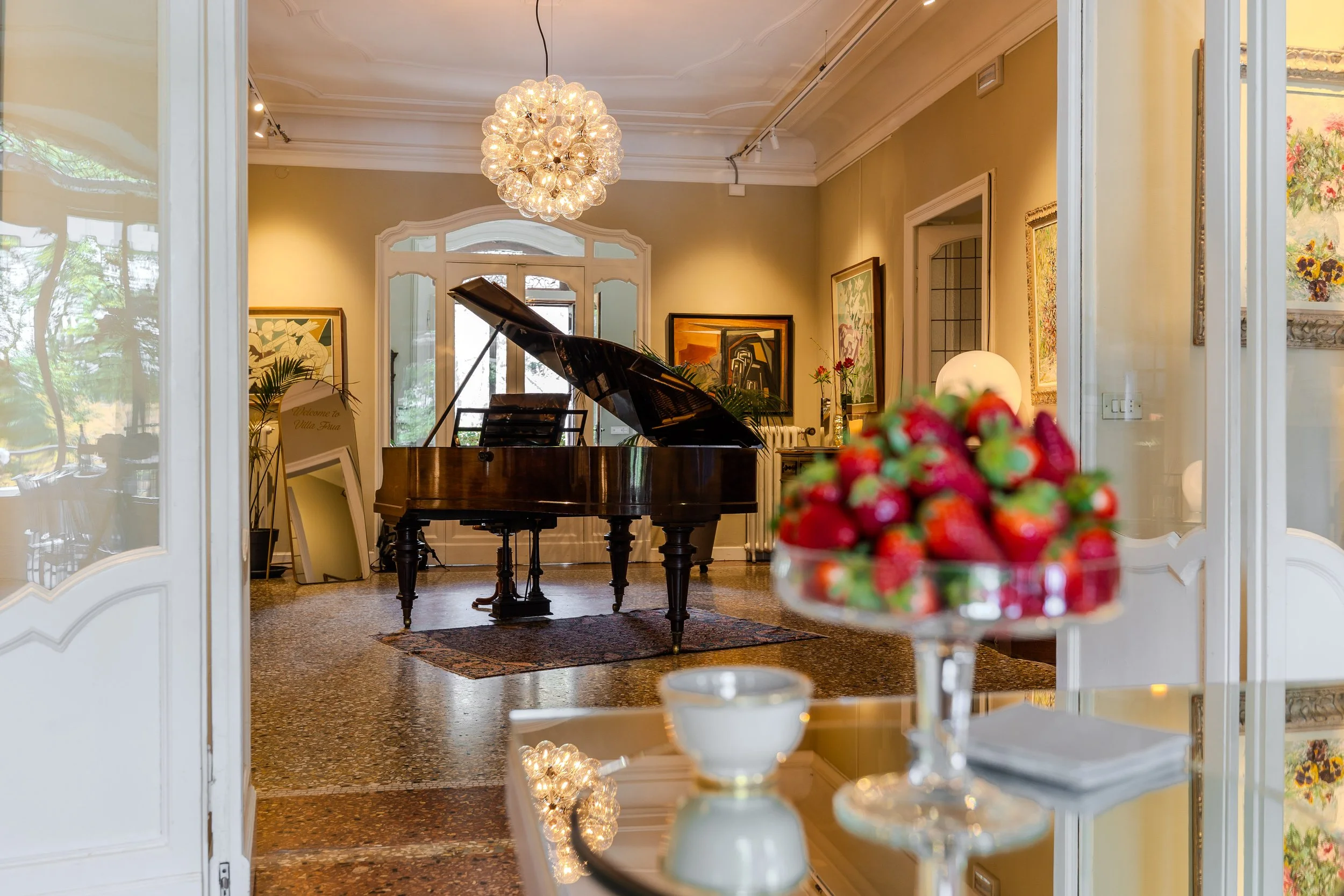
Photo copyright: Villa Frua
What the results showed
The experimental group showed statistically significant improvements across multiple domains:
Physical function improved by 16%. This measure, which assesses the capacity to perform everyday physical tasks, is considered one of the most reliable predictors of longevity and health outcomes in older adults.
Psychological wellbeing improved by 14%. This measure captures life satisfaction, positive affect, and sense of purpose — all of which are independently associated with health outcomes.
Depressive symptoms decreased by 33%. Anxiety decreased by 29%. Both are clinically meaningful reductions by any standard measure.
Improvements in cardiovascular parameters were also recorded.
The control group showed no equivalent changes across the measurement period.
What comes next
The first edition of the Reverso retreat represents, in part, a continuation of this research — an opportunity to observe and measure what happens when the protocol is delivered in an optimised real-world setting, with scientific oversight, to a carefully selected group of participants.
The science does not ask you to believe in magic. It asks you to consider that the relationship between mind, body and age is more interesting — and more malleable — than you may have assumed.
Reverso Counterclockwise — reverso-retreat.com
